
THE WORDS ON YOUR WEBSITE ARE PRIMING YOUR FUTURE CLIENTS
How Website Copy Shapes Expectations, Conversions, and Client Behavior
INTRODUCTION
Imagine you're meeting someone for coffee. The day before, a friend says: "You're going to love Sarah. She's incredibly organized."
The next morning, Sarah arrives exactly on time. She already knows where she's sitting. She has notes. She remembers details from your last conversation.
You leave thinking: Wow. She's really organized.
Now imagine your friend had said: "Sarah is one of the most creative people I've ever met." You'd probably notice different things. The colorful notebook. The interesting ideas. The way she solves problems. The stories she tells. The energy she brings to the conversation.
Same person. Different expectation. Different experience.
That's priming.
And whether you realize it or not, your website is doing the exact same thing. Every headline. Every button. Every service description. Every FAQ. Every contact form. Every confirmation page. Every automated email. Every calendar invitation. Every single word is teaching people what to expect from working with you.
Most business owners think website copy has one job: Explain what they do. Maybe help with SEO. Maybe convince someone to inquire. But website copy is doing something much bigger than that.
It's creating expectations. And expectations influence behavior.
The words on your website influence:
How people feel about you
How quickly they trust you
How they behave during the sales process
How prepared they are for meetings
How they communicate with you
How they perceive your expertise
How successful the client relationship becomes
Most business owners spend weeks choosing fonts, colors, photos, layouts, and design elements. Meanwhile, the words on their website are quietly shaping the entire client experience.
Let's talk about why that matters.
What Is Priming?
Priming is the process of influencing expectations before an experience happens. When people receive information ahead of time, their brains begin creating a framework for what comes next.
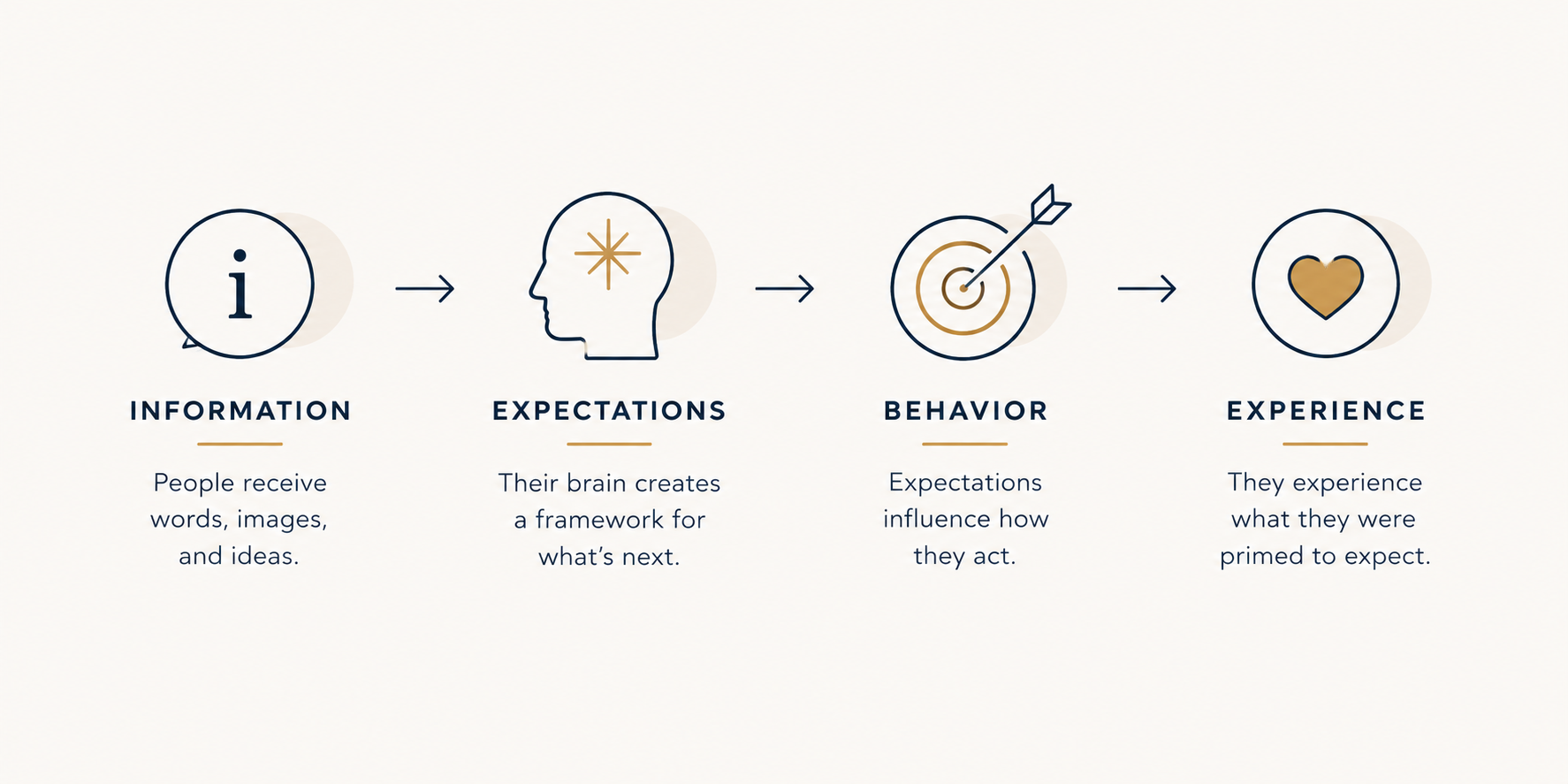
That framework affects what they notice. What they remember. What they focus on. And how they behave. In business, this happens constantly. A restaurant primes you with its menu. A hotel primes you with its photography. A speaker primes you with their introduction. A fitness coach primes you with their marketing.
A website primes visitors before they ever click the contact button. The important thing to understand is this:
Your website is never neutral.
Many business owners assume their copy is simply informational. It isn't. Every word creates an expectation. The question isn't whether you're priming visitors. You are.
The question is:
What are you priming them to expect?
“What people see first affects how they they think later”
Why Two Businesses Can Offer The Same Service But Attract Completely Different Clients
Same service. Different messaging. Different Expectations. Different Results.
This is where priming becomes incredibly important. Because the words on your website don't just influence conversions. They influence the type of clients who reach out.
Imagine two photographers. Same city. Similar pricing. Similar skill level. Similar portfolios.
While the other attracts clients who:
Trust the process
Follow instructions
Arrive prepared
Value the experience
Yet one photographer constantly attracts clients who:
Ask for discounts
Ignore timelines
Show up unprepared
Question every recommendation
Why?
There are many factors. But one of them is expectation.
One website is teaching visitors: This is a commodity. The other website is teaching visitors: This is an experience.
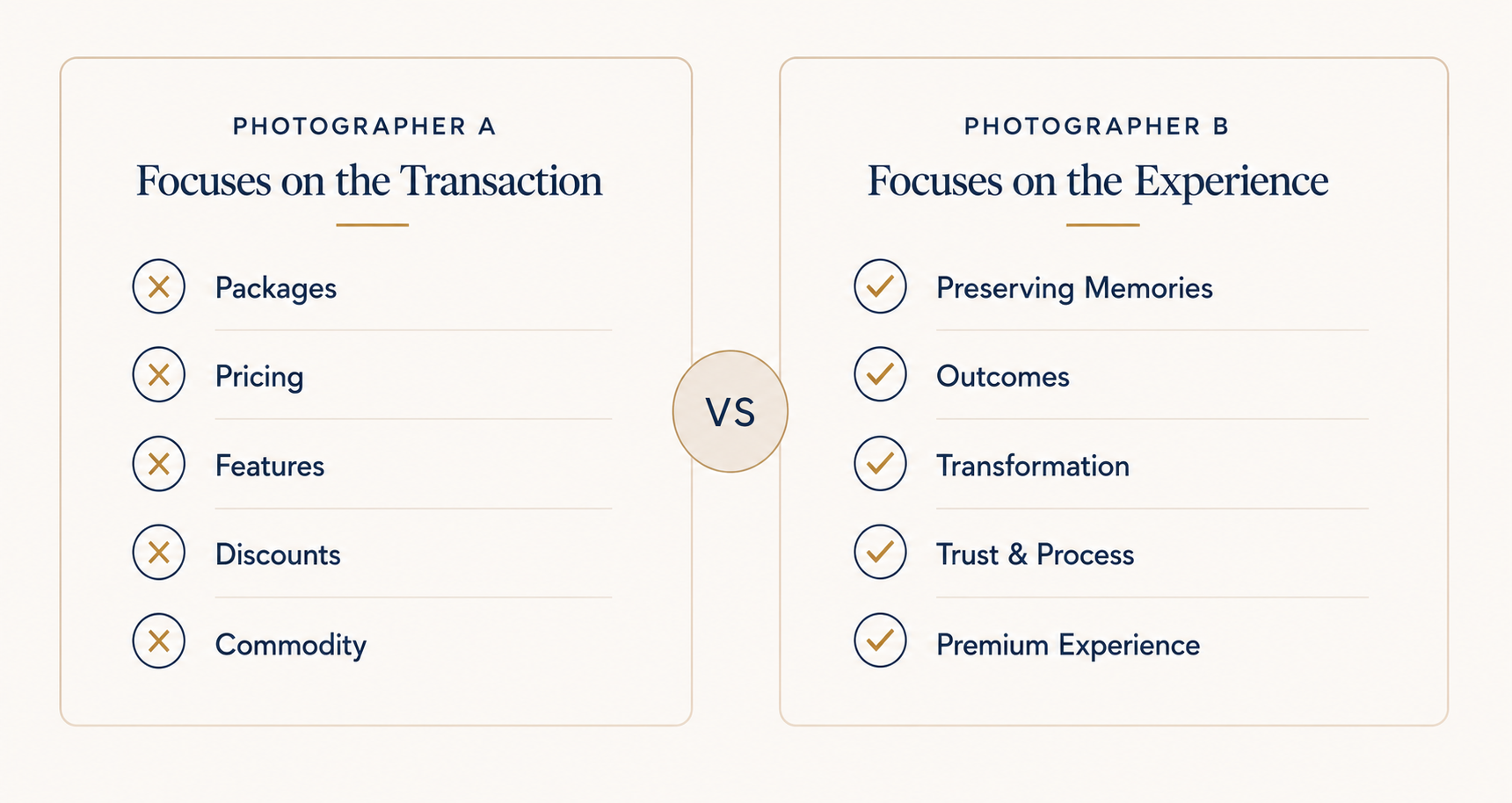
The service may be similar. The expectations are not. And expectations shape behavior.
This is one of the biggest missed opportunities in website copy. Most people focus on attracting clients.
Very few think about shaping them.

Your Website Is Not Just Information
One of the biggest mistakes I see business owners make is treating their website like a digital brochure.

But your website isn't just delivering information.
It's creating expectations.
IMAGINE TWO PERSONAL TRAINERS.
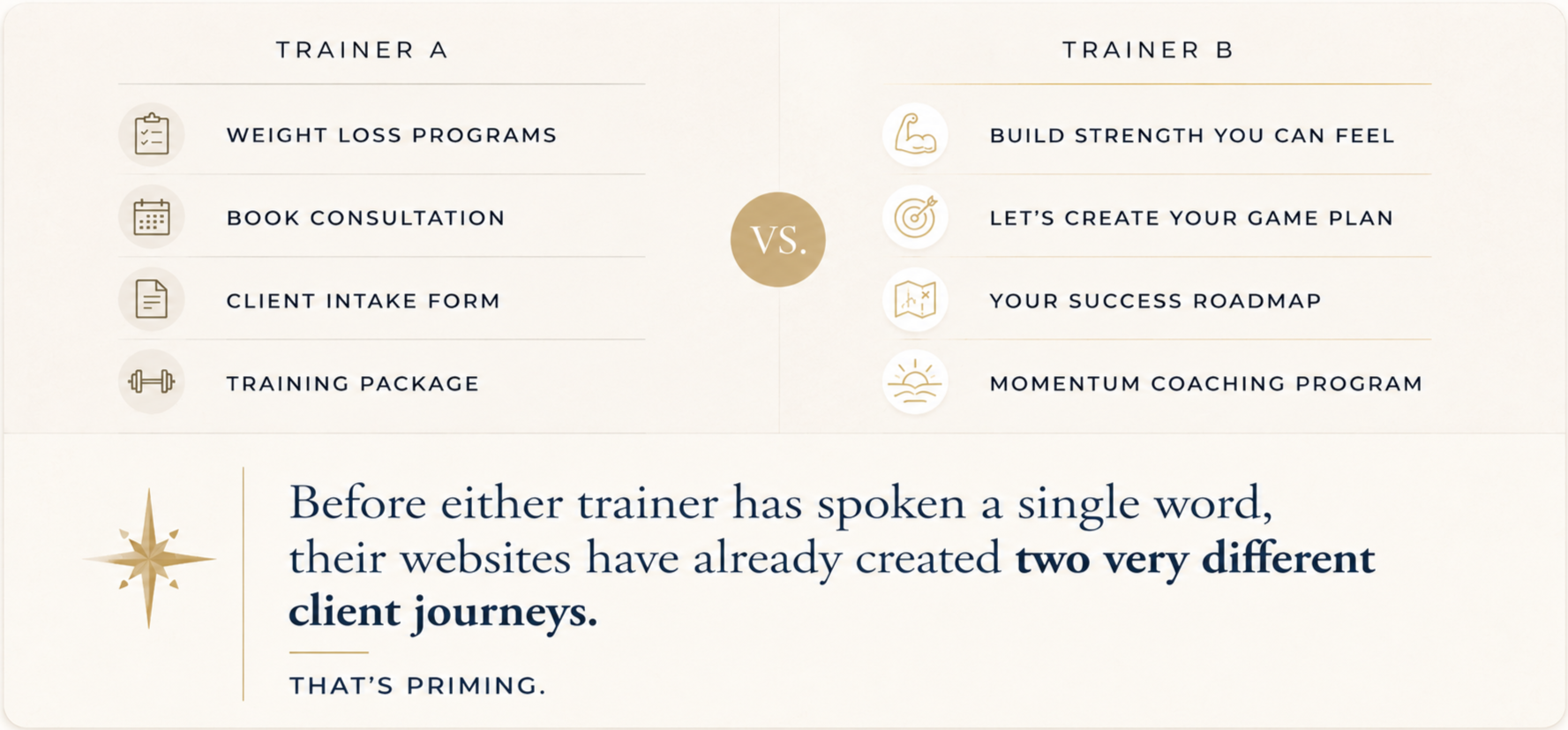
And most business owners are doing it accidentally.

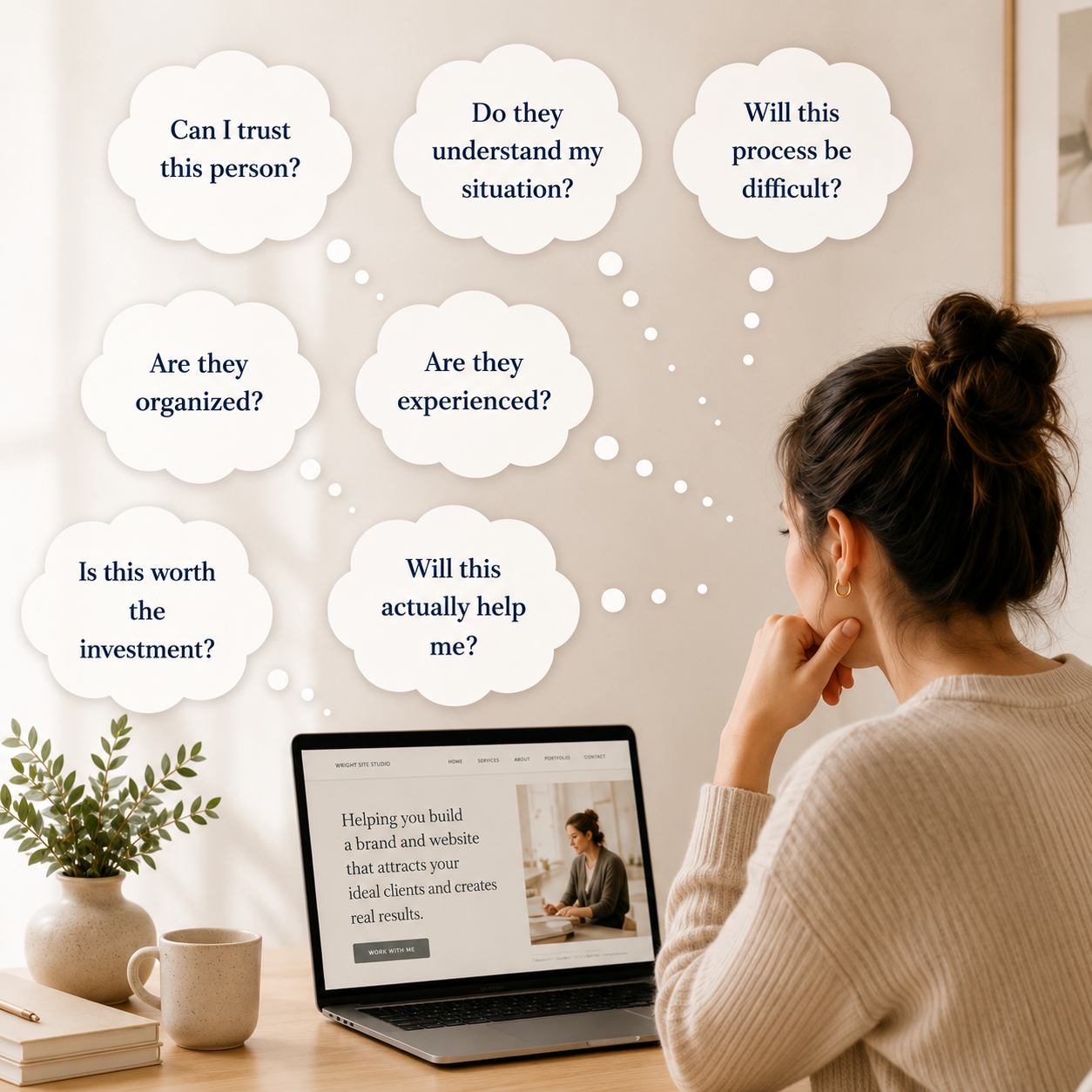
The Hidden Conversation Happening Inside Your Visitor's Head
When someone lands on your website, they're silently asking questions. Not out loud. But internally.
Your copy is answering those questions. Every page. Every section. Every headline. Every button.
The problem is that many websites answer those questions poorly, and that shapes everything.
NOT because the business is bad.
NOT because the service is bad.
BUT because the messaging is vague.
Generic copy creates generic expectations. And generic expectations rarely inspire action.
THE TAKEAWAY: Your words prime their experience
THE RIGHT WORDS SET THE RIGHT EXPECTATIONS.
THE RIGHT EXPECTATIONS CREATE BETTER CLIENTS AND BETTER RESULTS
The Accidental Priming Problem
Most business owners never intentionally choose the emotional impact of their words.
They simply write what sounds professional.
Unfortunately, "professional" often becomes generic.
And generic creates weak expectations.
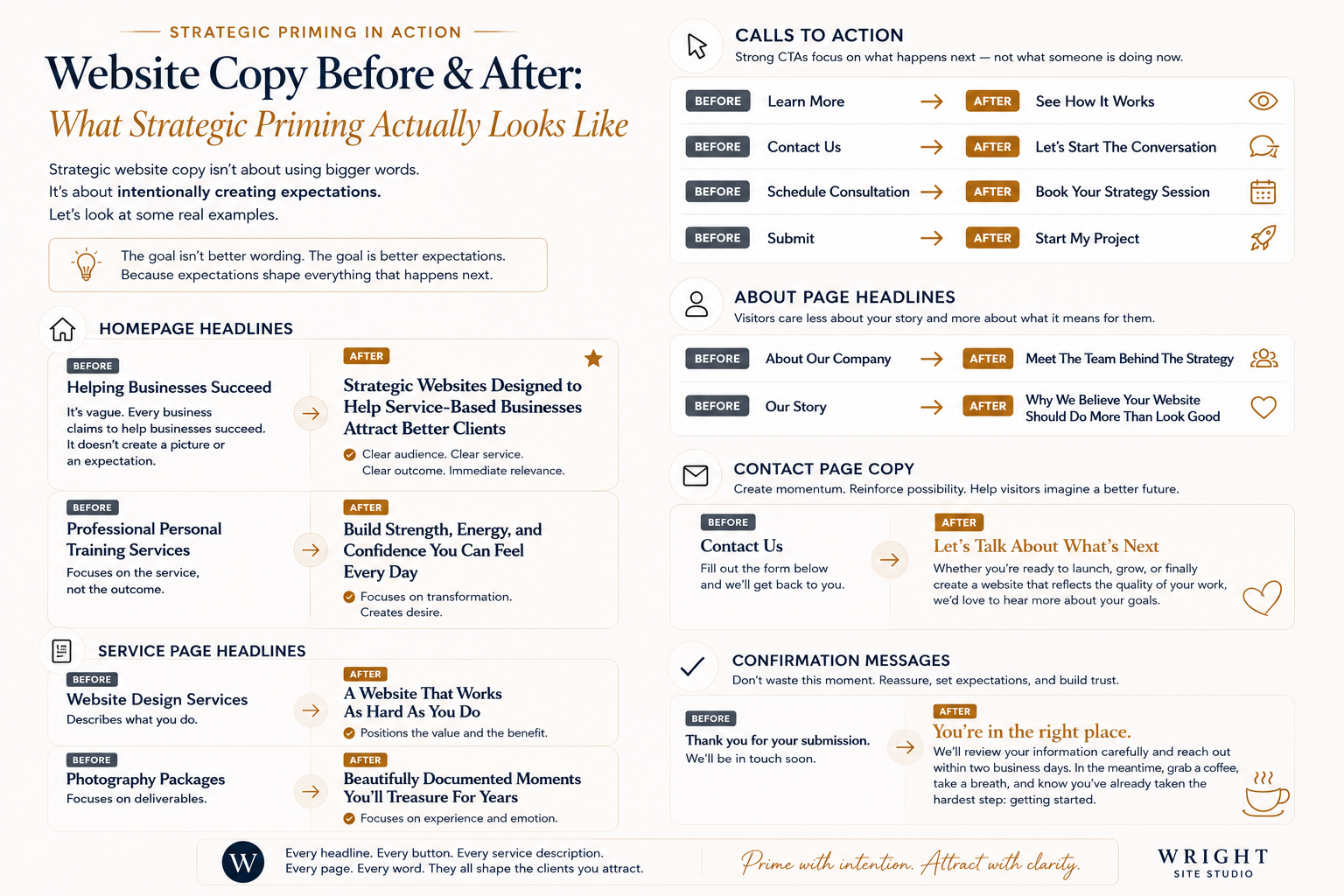
Consider these examples.
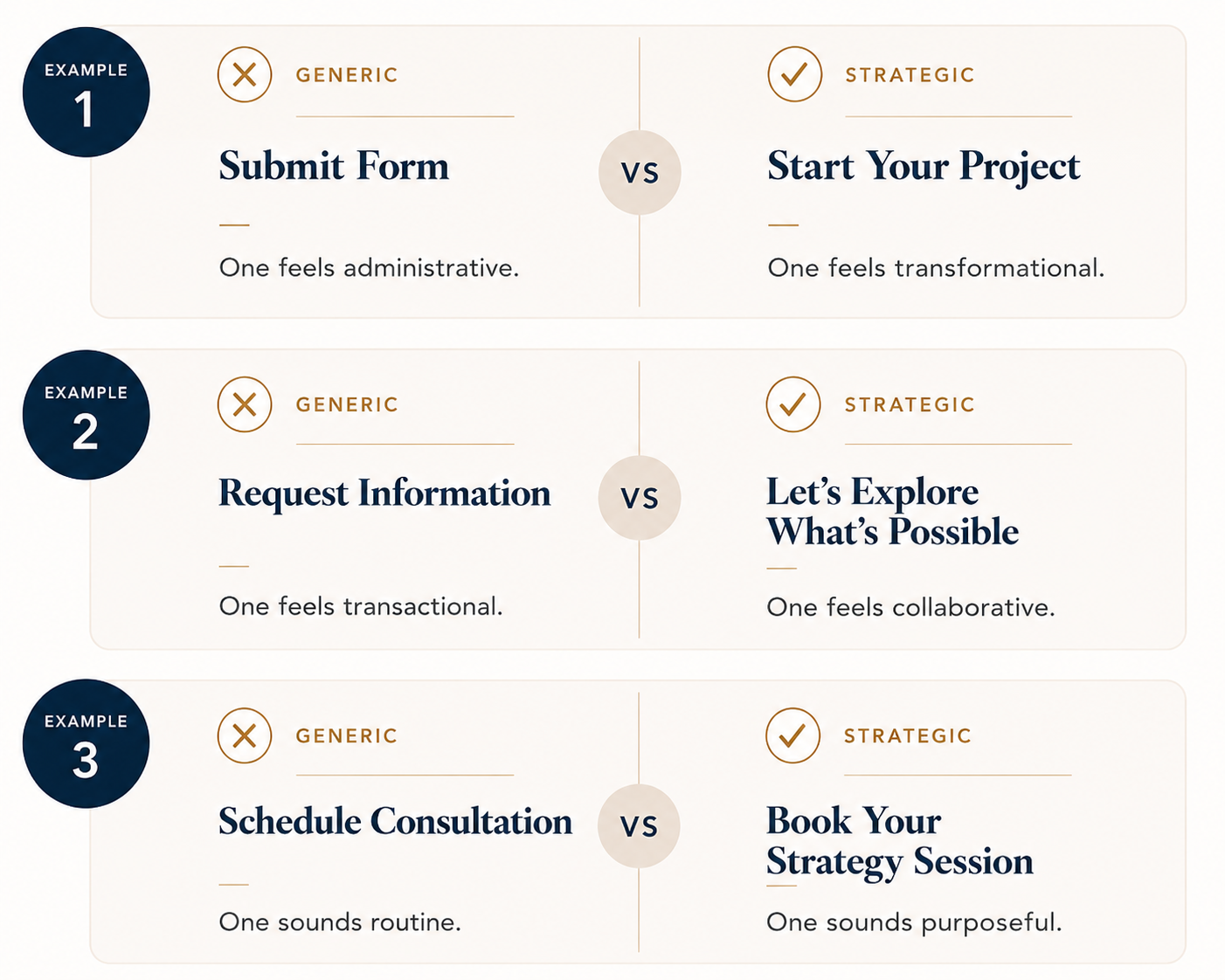
The action hasn’t changed.
The expectations has.
And expectation changes experience.
Homepage Priming: The Most Important 7 Seconds On Your Website
Your homepage is your digital first impression. Before someone reads your About page. Before they explore your services. Before they read a testimonial. Before they contact you.
They make a series of snap judgements. Not because they’re shallow. Because they are human.
Because they're human. When someone lands on your website, their brain immediately starts answering questions like:
Is this relevant to me?
Am I in the right place?
Does this person understand my problem?
Can I trust them?
Should I keep reading?
The answers to those questions happen surprisingly fast. And your homepage is responsible for setting the tone.
That means your homepage isn't just introducing your business. It’s creating expectations.
Let's look at two examples.
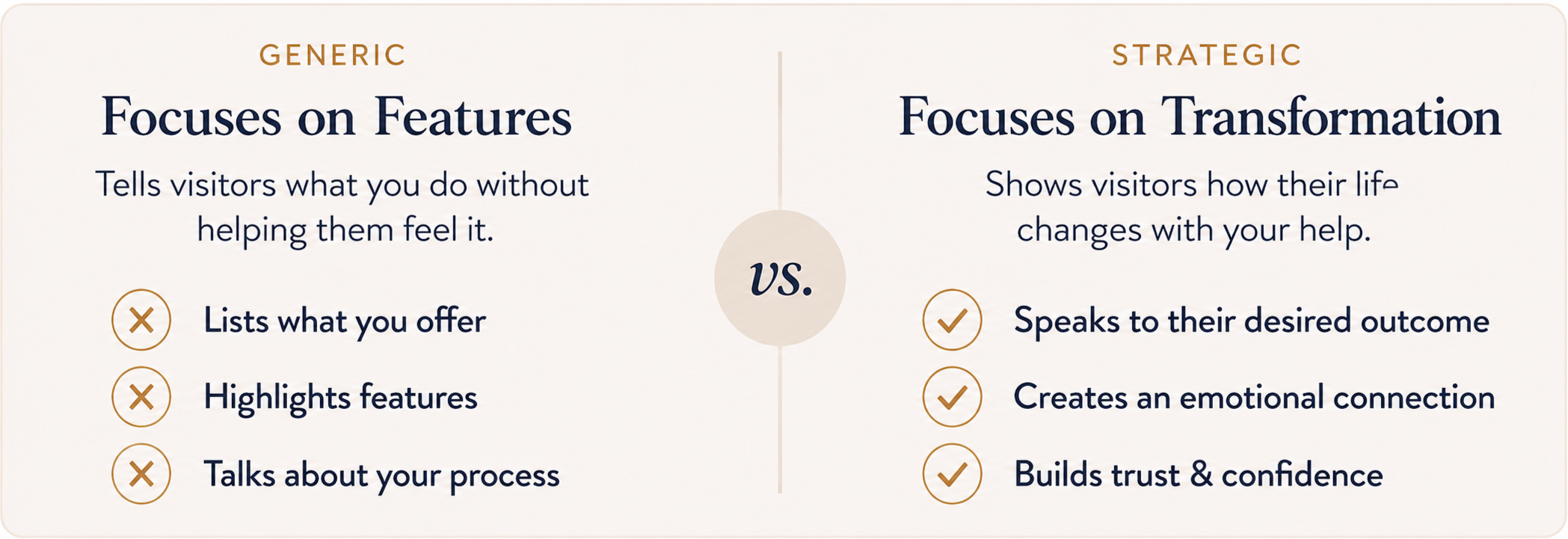
The strongest homepage copy does four things quickly:
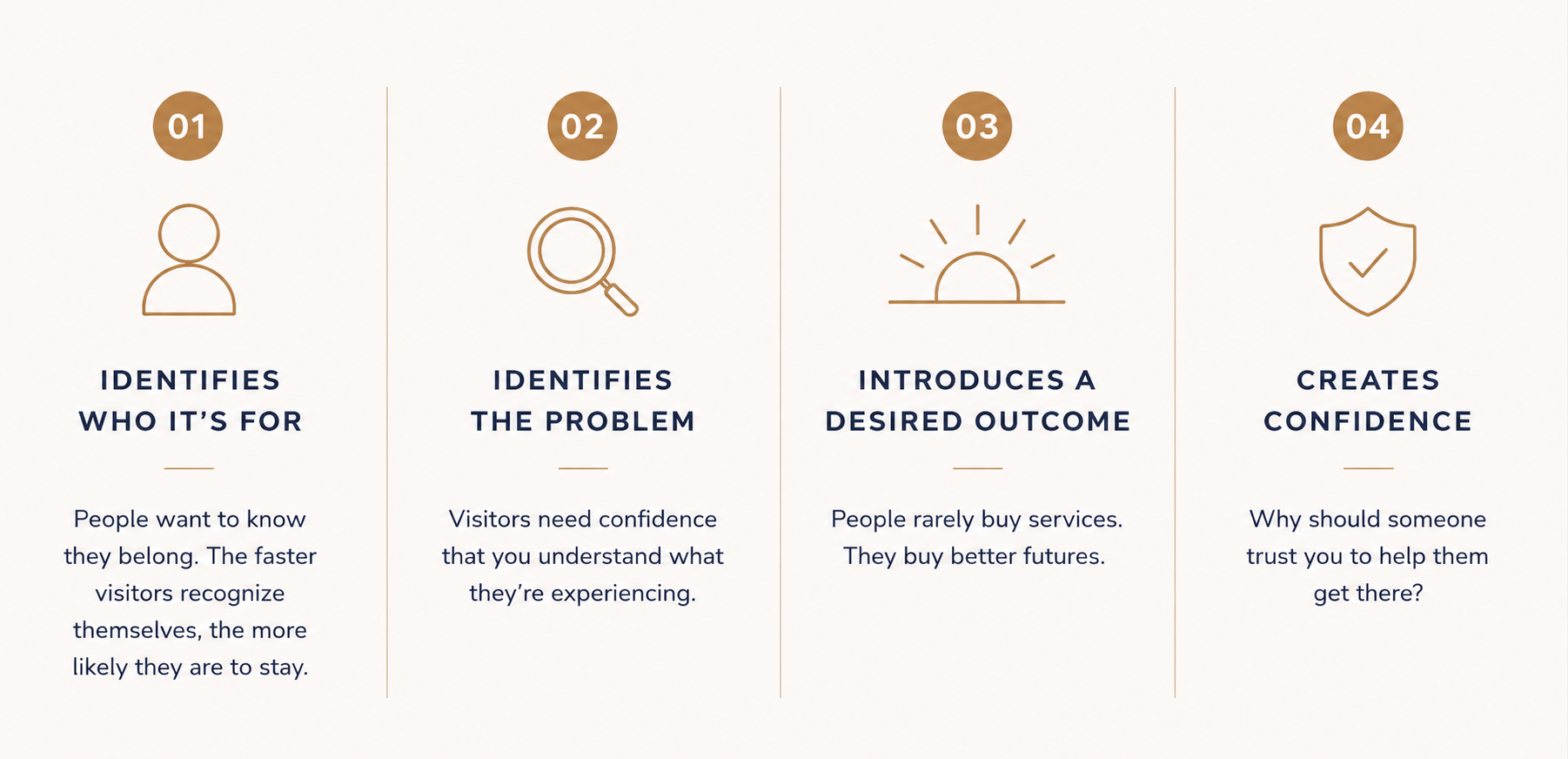
Every section that follows should continue reinforcing those ideas. Not randomly. Intentionally.
That’s how your homepage creates a clear, confident path from curiosity to action.
Every Button Is A Tiny Promise
Most business owners treat buttons like navigation tools.
They're not.
They're promises.
Every button tells someone what happens next.
And the words you choose influence whether people click.

People are not clicking buttons because they love buttons.
They're clicking because they want
what happens after the click.
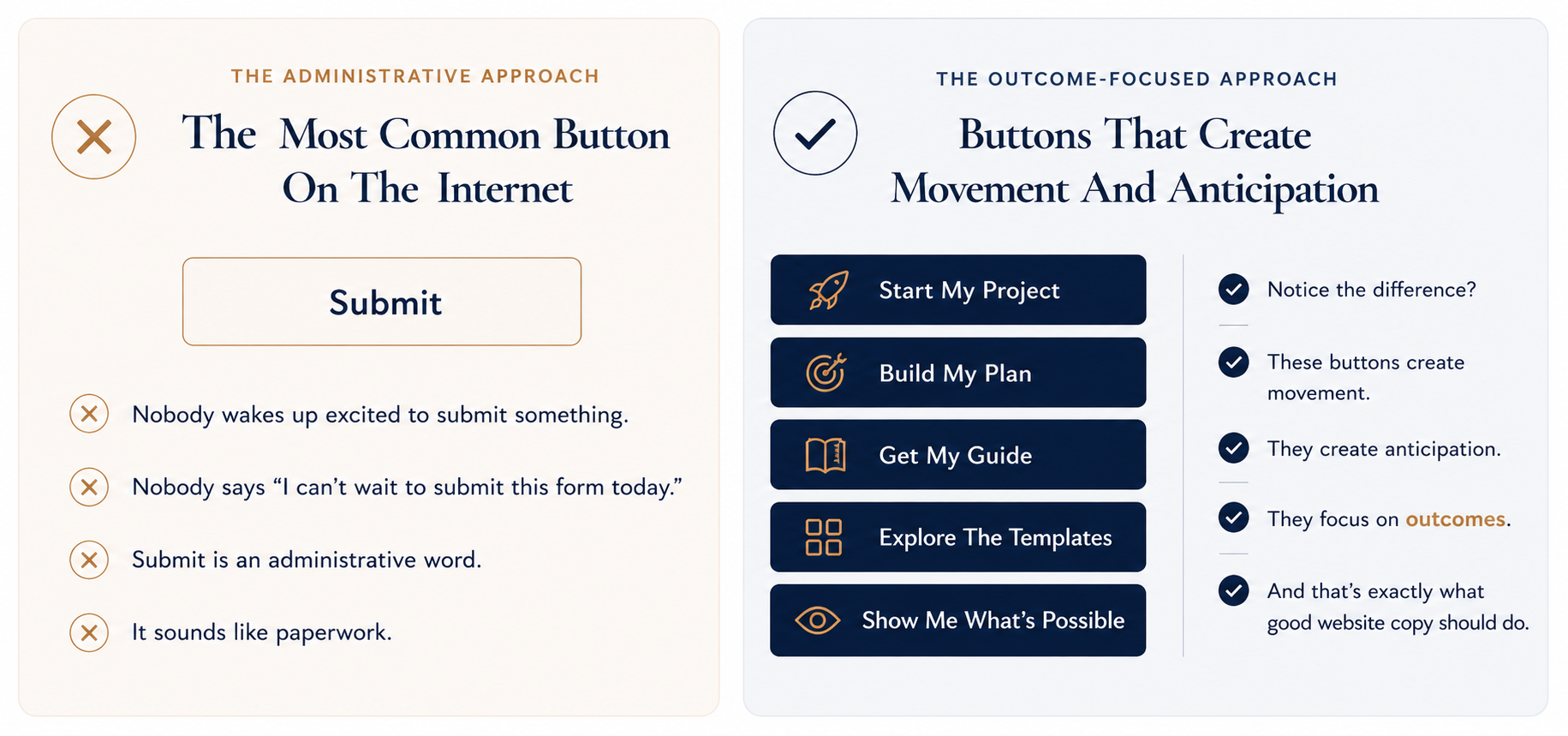
THE BUTTON THAT CONVERTS
That’s why every call to action should answer the questions:
What outcome is the visitor hoping for right now?
Because that’s what the button should be selling.
Not the action.
The outcome.
Your Service Descriptions Are Priming Client Behavior
This is where things get really interesting. Because service descriptions don't just influence whether someone buys.
They influence how they behave after they buy. Let's say you're a website designer.
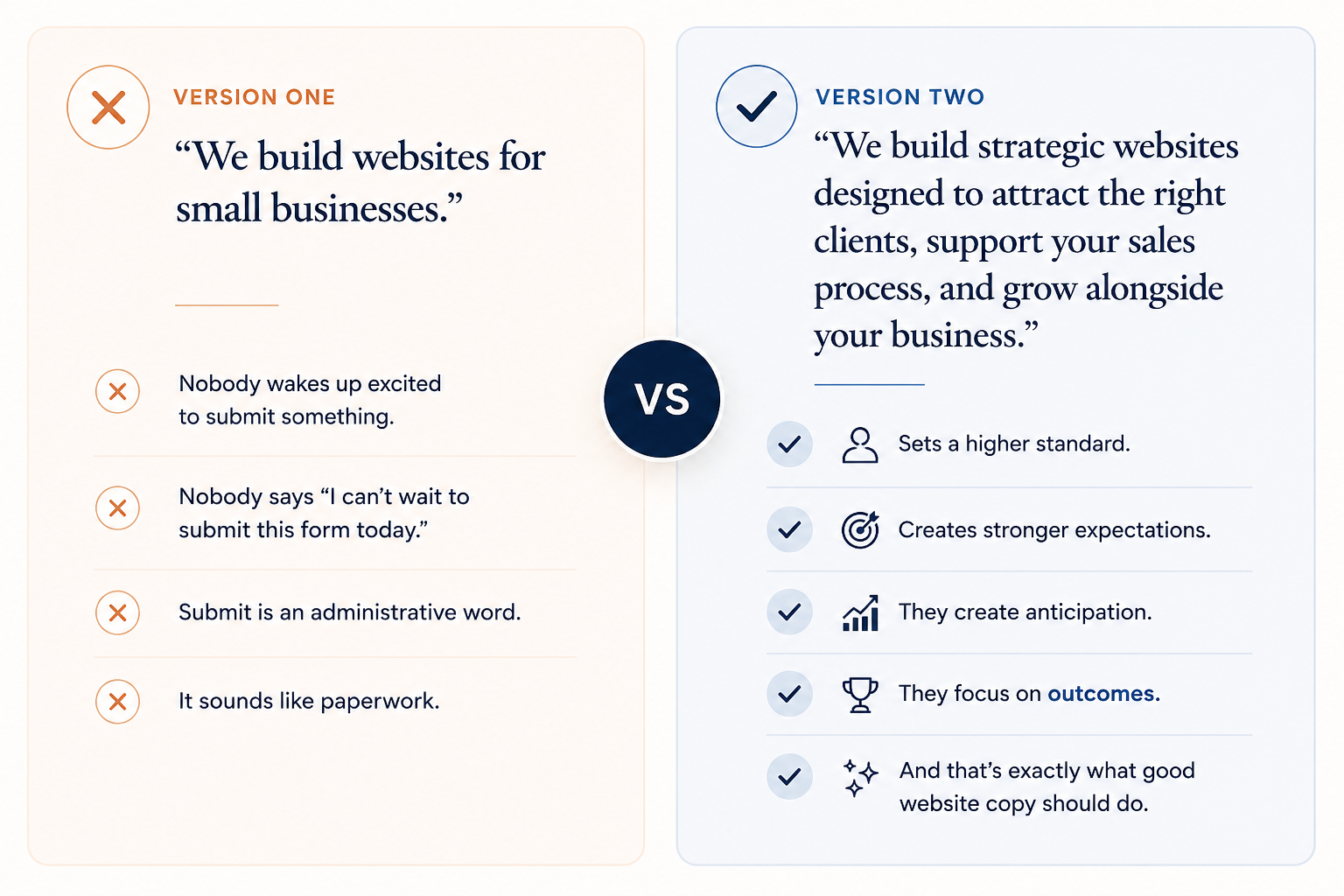
Notice what happened? The second version instantly changes expectations.
Visitors no longer expect pages.
They expect strategy.
They expect growth.
They expect results.
And those expectations follow them into the project.
Clients who expect strategy ask different questions.
Clients who expect growth think differently about their website.
Clients who expect partnership participate differently.
The service itself may not have changed. The expectations have. And expectations shape behavior.
The Most Overlooked Priming Tool On Your Website
Your Contact Form
Most contact forms look like this:
Name.
Email.
Phone.
Message.
Submit.
Done.
The problem?
A contact form isn't just collecting information.
It's shaping the conversation that follows.
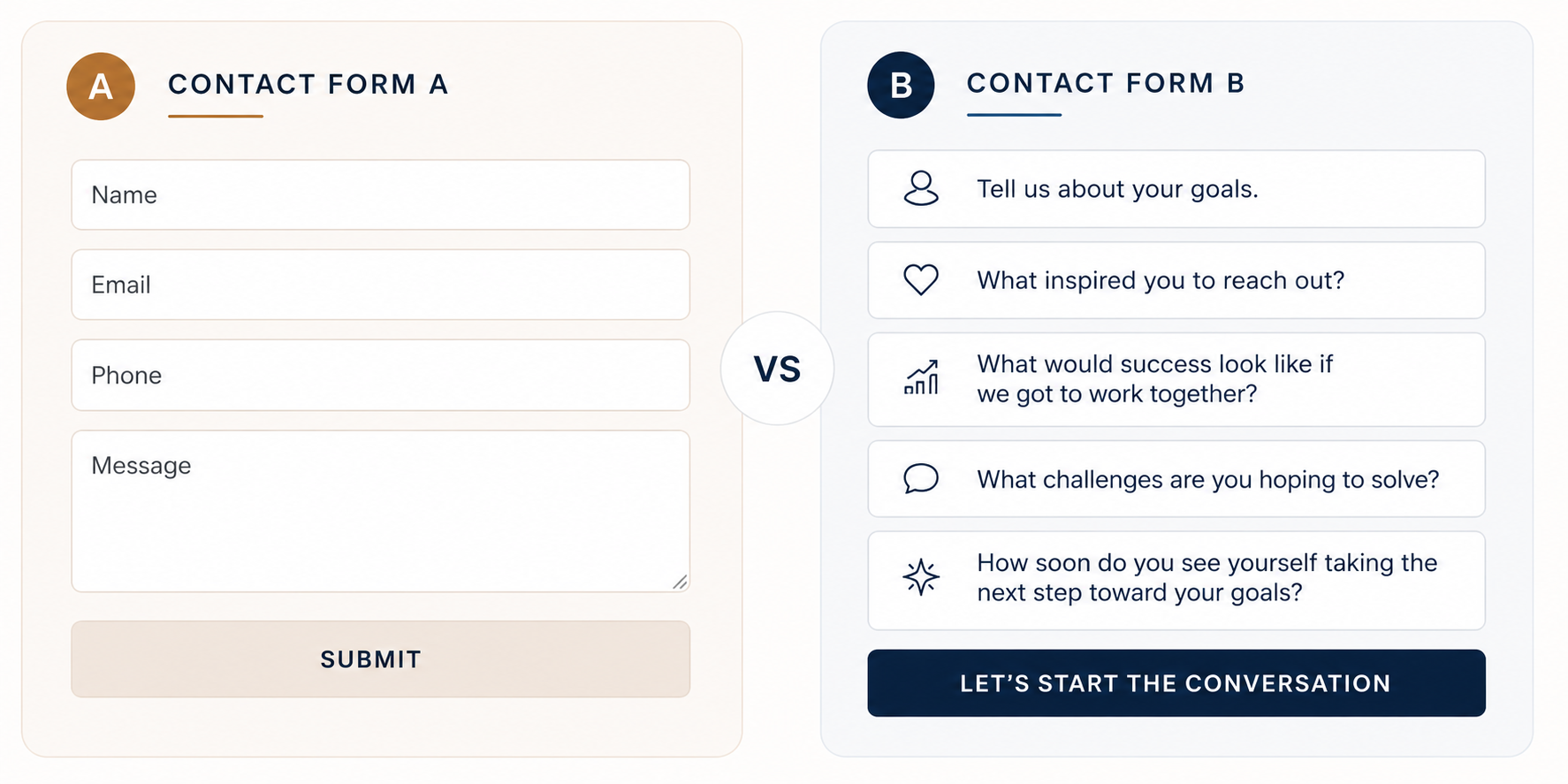
The second form is doing something powerful. It's teaching visitors how to think.
It's encouraging reflection.
It's encouraging strategy.
It's encouraging clarity.
And when people think differently before the conversation, they show up differently during the conversation.
The quality of inquiries improves.
The quality of conversations improves.
The quality of clients often improves too.
Not because you changed your service. Because you changed what people were primed to expect.
The Website Priming Framework
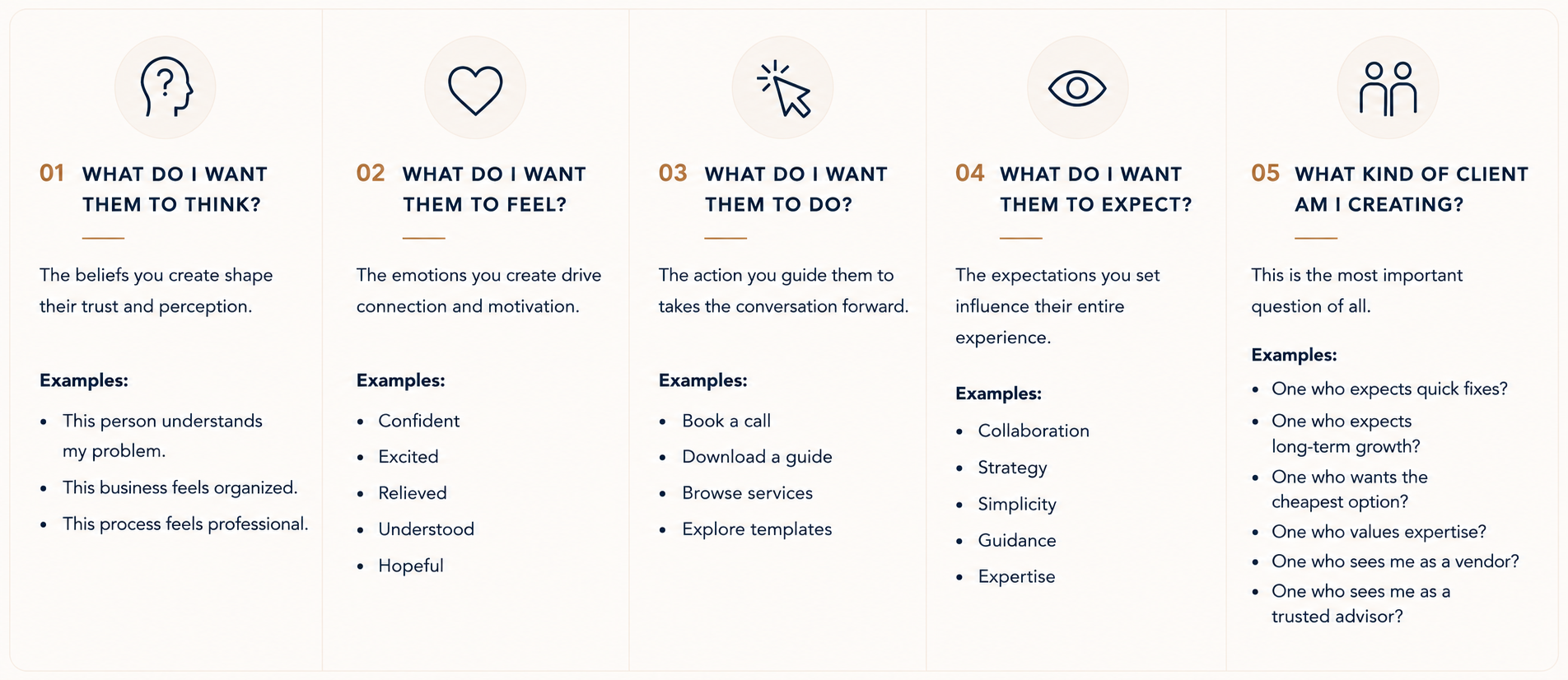
Whenever you're writing website copy, ask yourself five questions.
What Do I Want Them To Think?
What Do I Want Them To Feel?
What Do I Want Them To Do?
What Do I Want Them To Expect?
What Kind Of Client Am I Creating?
VENDOR vs. STRATEGIC PARTNER
Are you creating clients who see you as a vendor?
Or clients who see you as a strategic partner?
CHEAPEST OPTION vs. VALUE & EXPERTISE
Are you creating clients who want the cheapest option?
Or clients who understand and value expertise?
QUICK FIXES vs. LONG-TERM GROWTH
Are you creating clients who expect quick fixes?
Or clients who expect long term growth?
The answers to these questions live in your copy. Every headline. Every paragraph. Every button.
Warm Words vs. Competent Words: The Secret Language of Trust
One of the most fascinating things about communication is that people are constantly evaluating us through two questions:

At first glance, those questions sound similar. They’re not.
A website can feel incredibly warm and approachable but leave visitors wondering whether the business knows what it’s doing.
A website can feel highly professional and competent but leave visitors feeling disconnected or intimidated.
THE STRONGEST WEBSITES DO BOTH.
They create trust. And they create confidence. 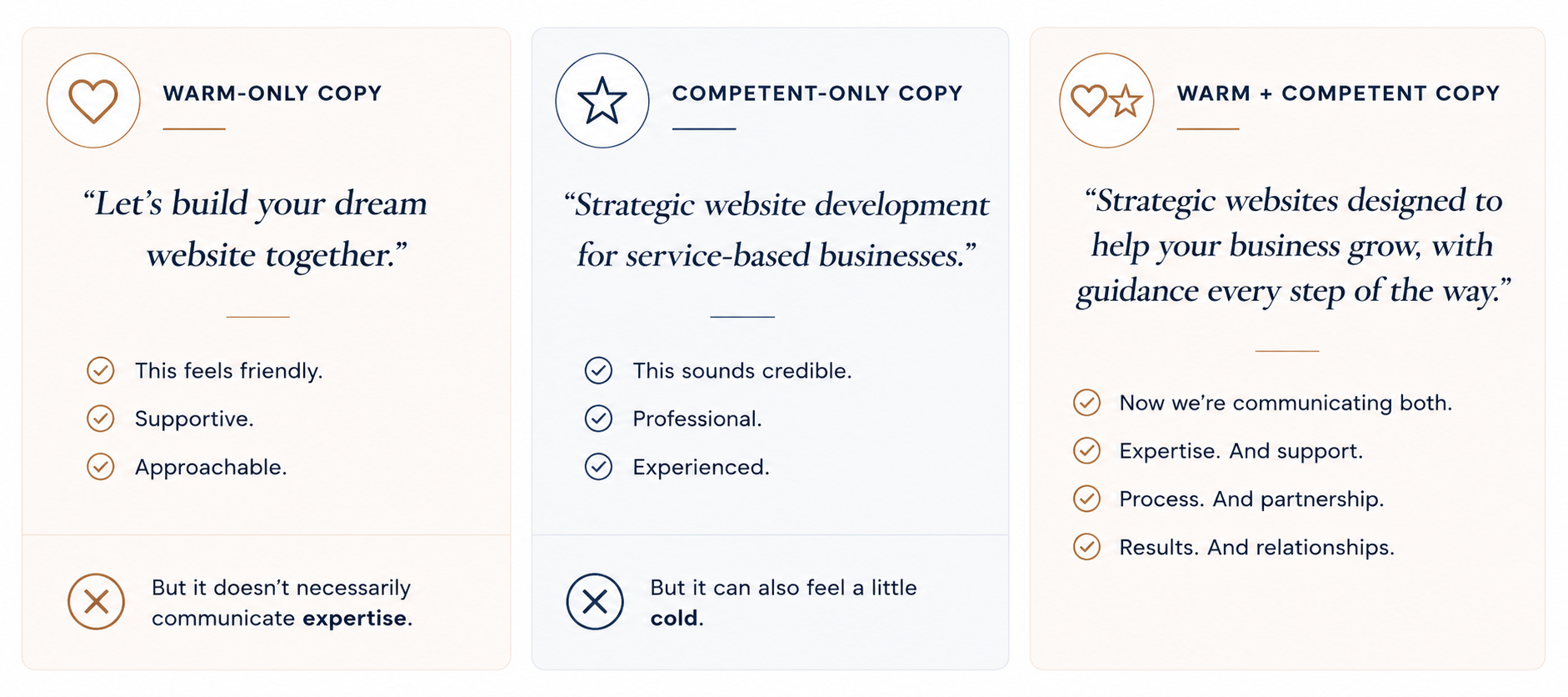
THE BALANCE THAT BUILDS TRUST
The strongest website copy balances both sides.
YOUR WEBSITE IS EITHER
Feeding Anxiety Or Confidence
Every visitor arrives with uncertainty.
Even if they're excited.
Even if they were referred.
Even if they're actively searching for exactly what you offer.
Your website is either reducing those concerns or reinforcing them.
There is very little middle ground.
VISITORS ARE WONDERING:
Is this worth the investment?
Will this actually work?
Will this be difficult?
What happens after I contact them?
Will I regret this decision?
Am I making the right choices?
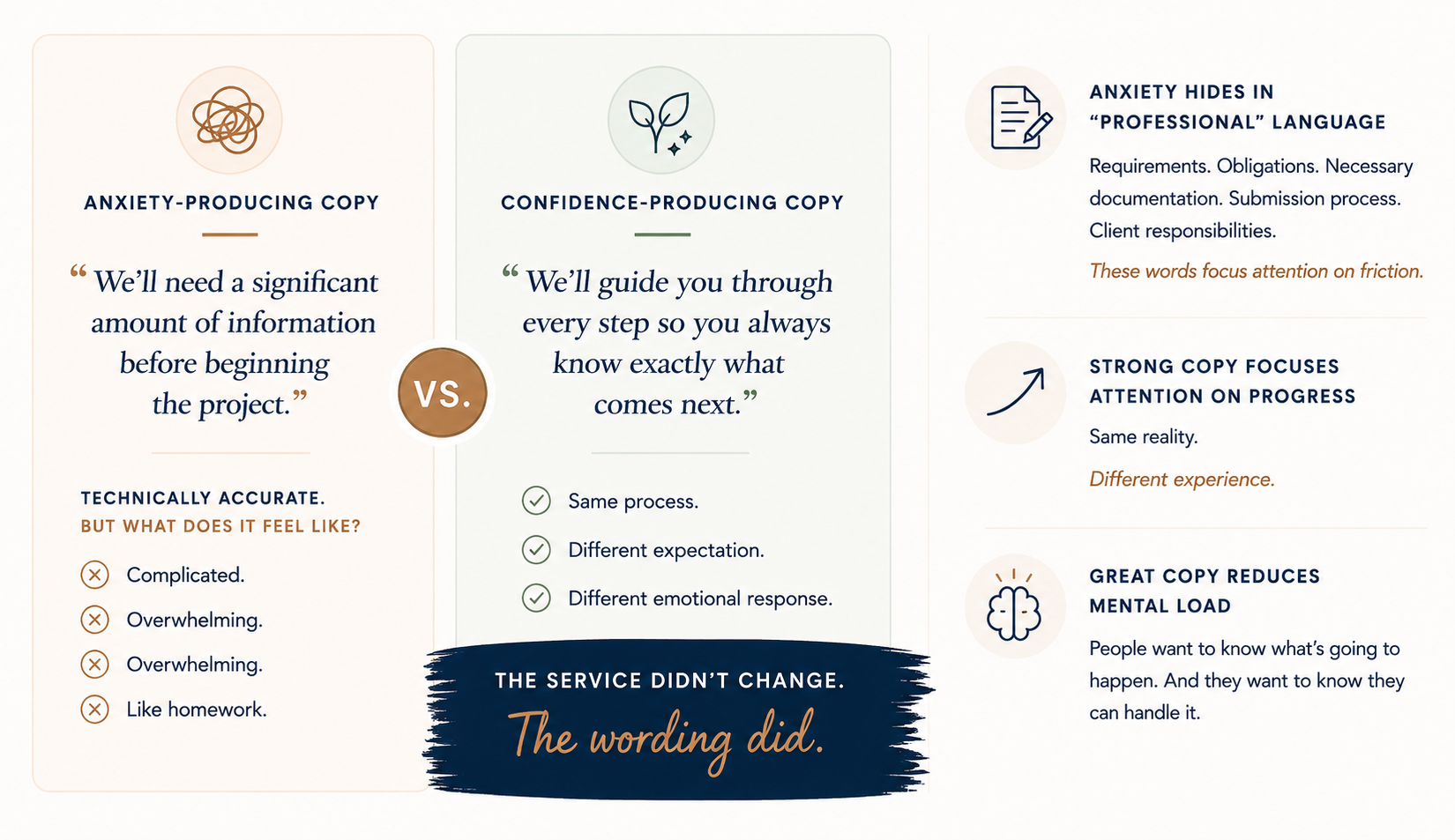
The more uncertain the process feels, the harder it becomes for visitors to move forward.
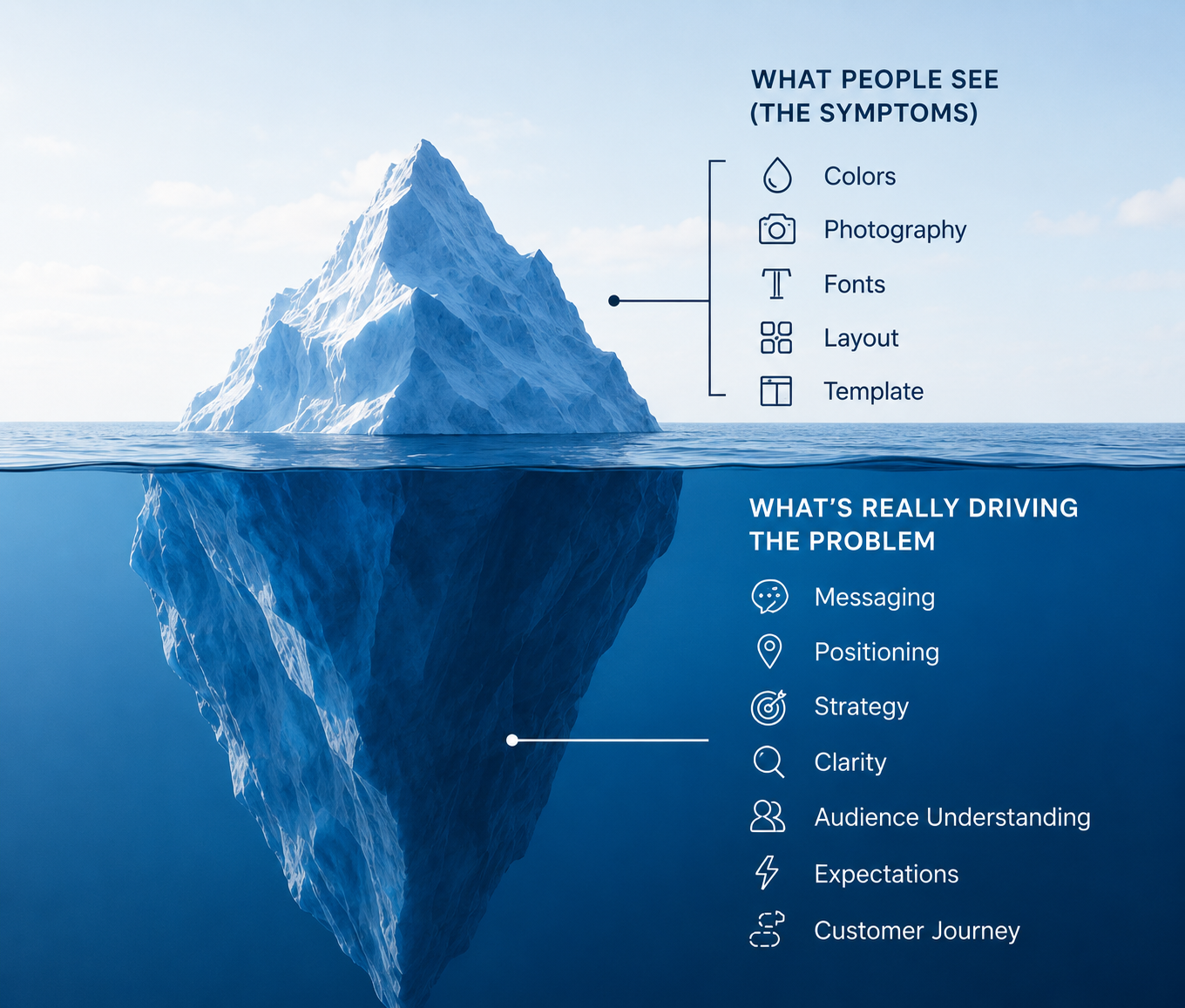
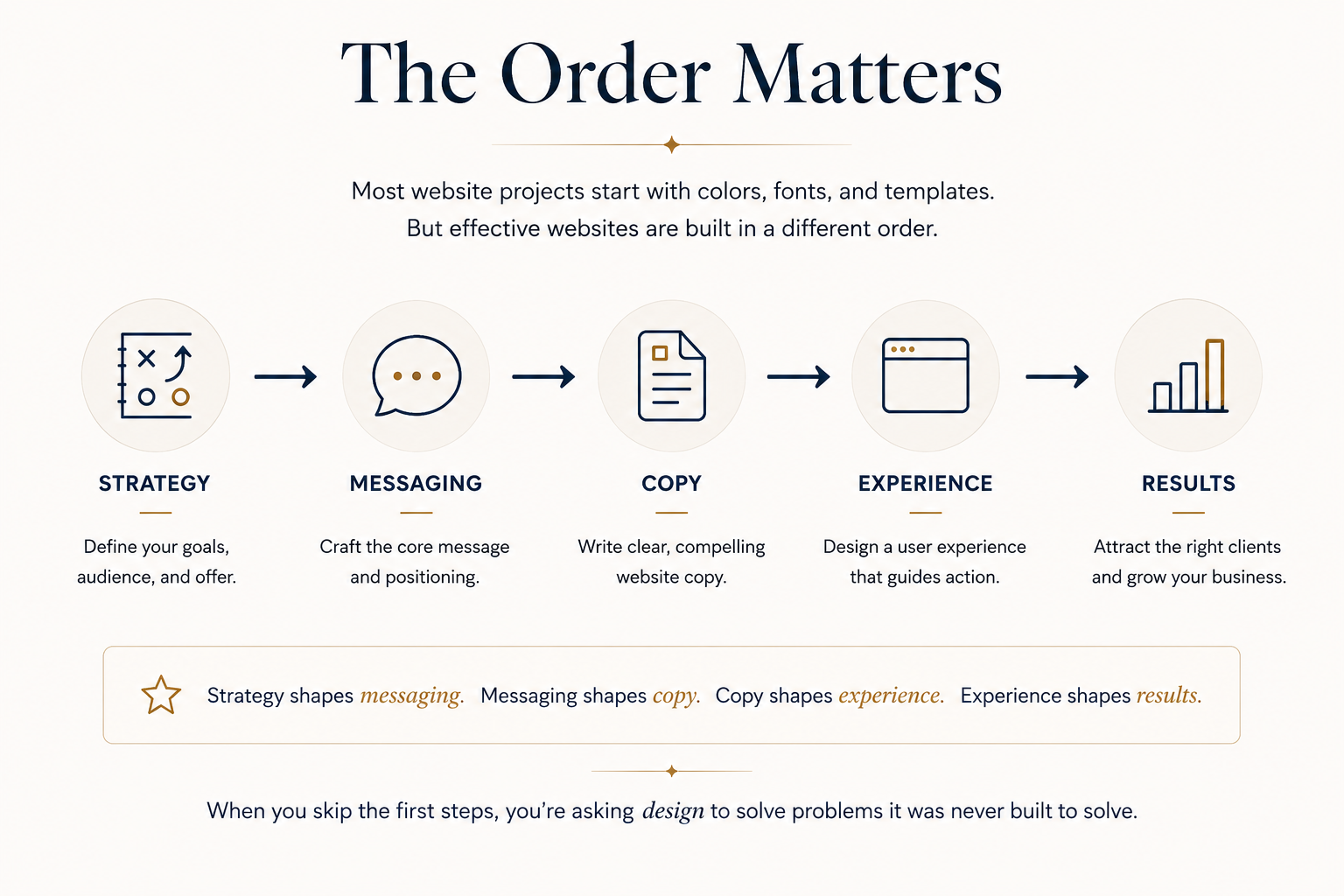
Why Design Templates Don't Fix Messaging Problems
The colors, fonts, photos, and template are simply the parts people can see.
The real issues usually live underneath the surface.
If your messaging isn’t clear, your positioning isn’t defined or your audience doesnt immediately understand why they should care, no amount of design can solve the problem.
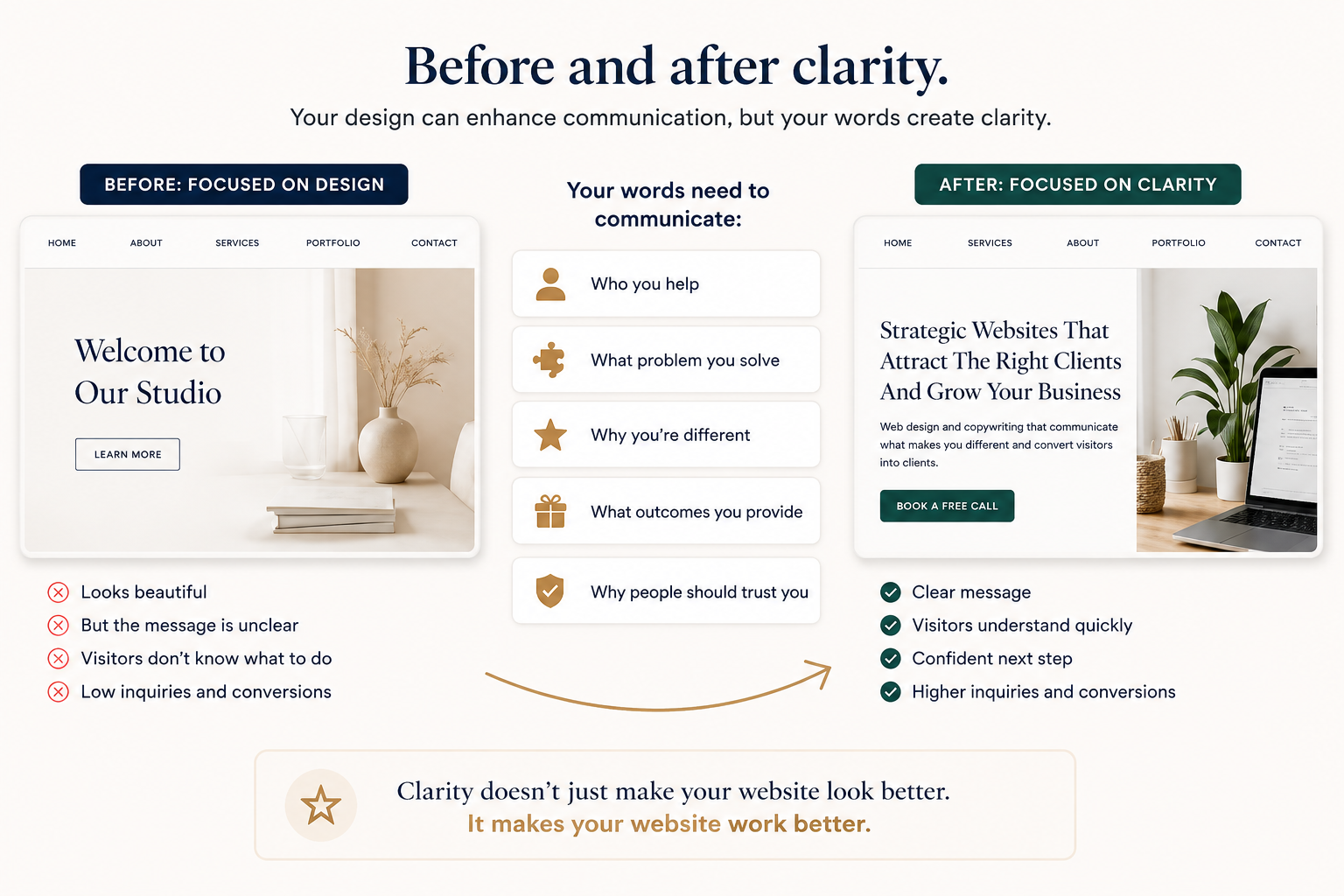
A beautiful website can amplify a strong message.
It can’t create one.
A Beautiful Website Can’t Explain What You Do
Your design can enhance communication, but your words create clarity.
Why We Created The Website Priming Blueprint
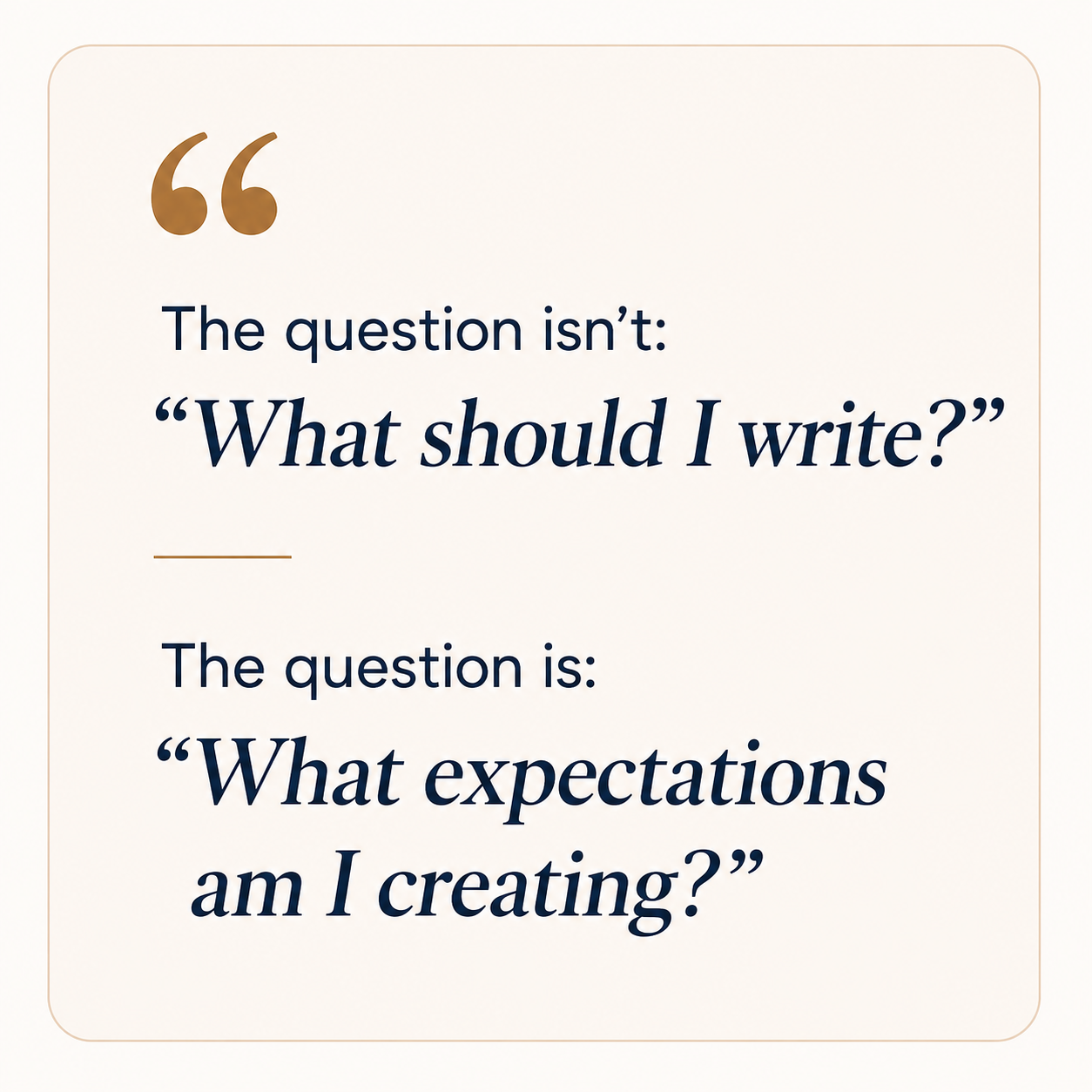
Most website advice focuses on writing. We wanted to focus on thinking. Because the best copy doesn’t start with words, it starts with intention.
Every headline, button, service description, and contact form is teaching people what to expect from working with you.
The Website Priming Blueprint
A 4-step framework to create expectations that attract your ideal clients.
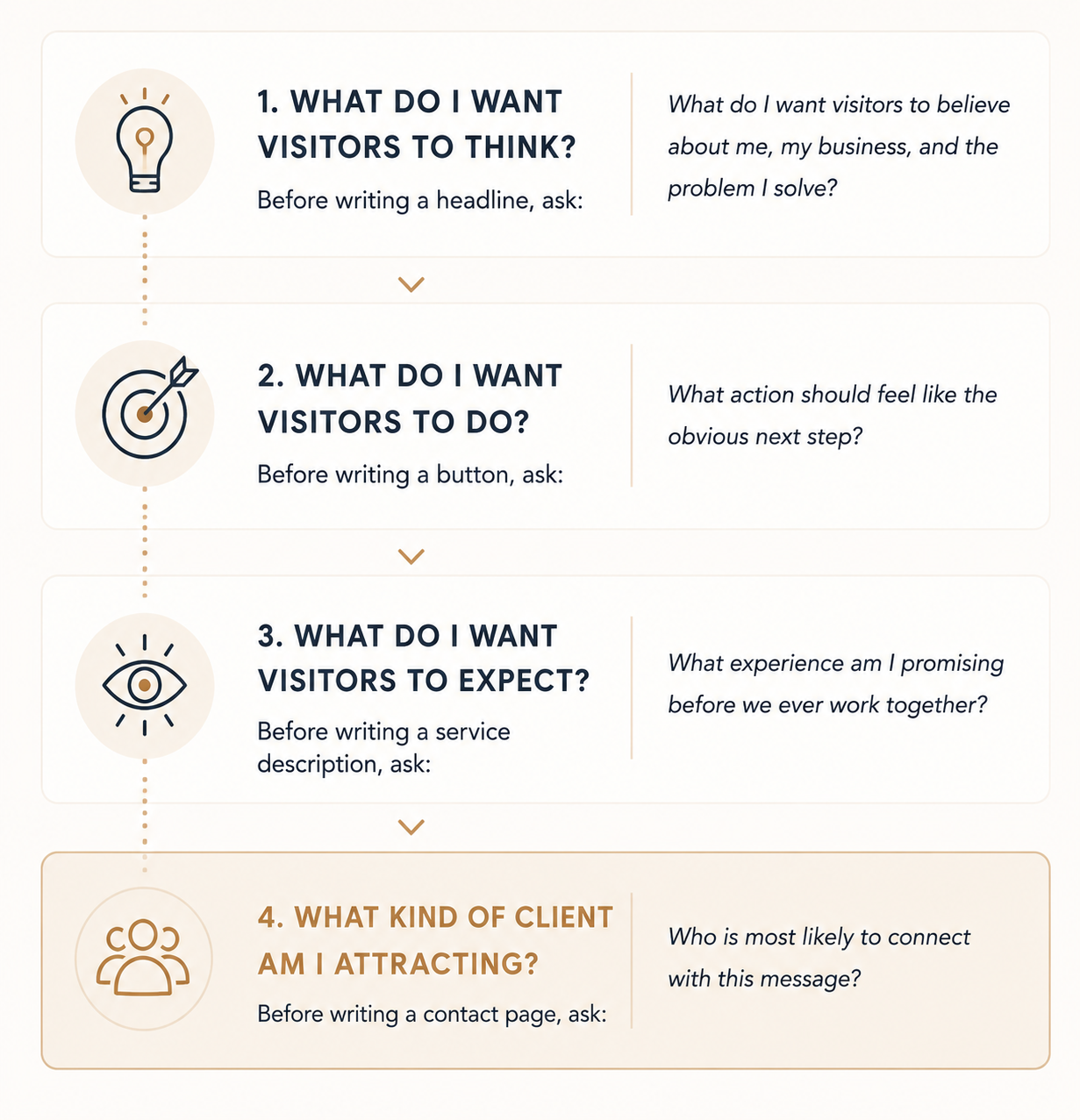
BECAUSE YOUR WEBSITE DOESN’T JUST ATTRACT CLIENTS.
It attracts certain kinds of clients

Clients who value expertise
Clients who trust the process
Clients who appreciate strategy
Clients who want long-term growth

Clients who focus only on price
Clients who want quick fixes
Clients who skip the process
Clients who trust you like a commodity
THE ENTIRE POINT
When you start asking better questions, you start writing better copy. When you write better copy, you create better experiences. When you create better experiences, you attract better-fit clients.
Not better wording. Better expectations.
Because expectations shape everything that happens next.
The Strongest Websites Focus On Identity
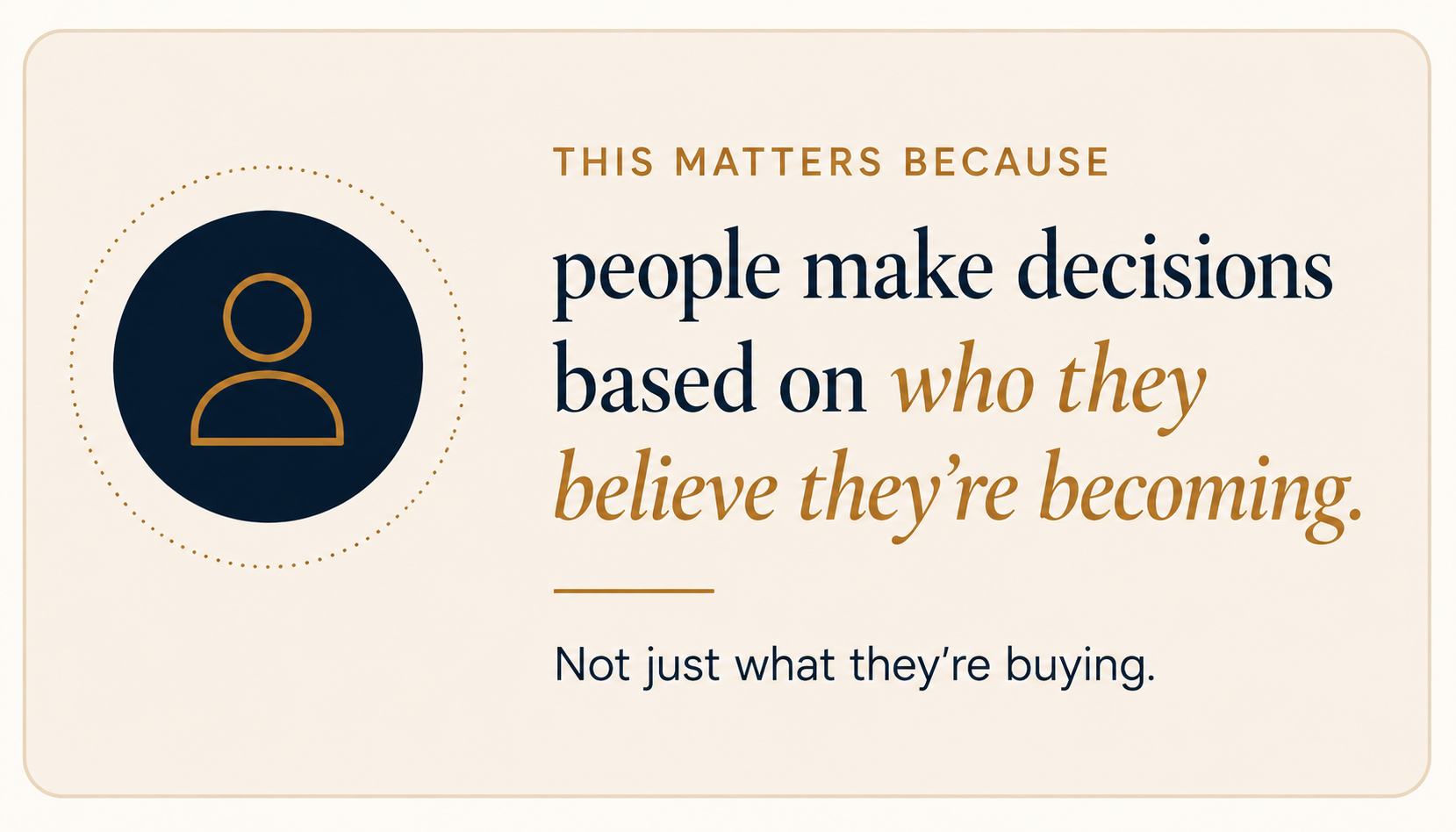
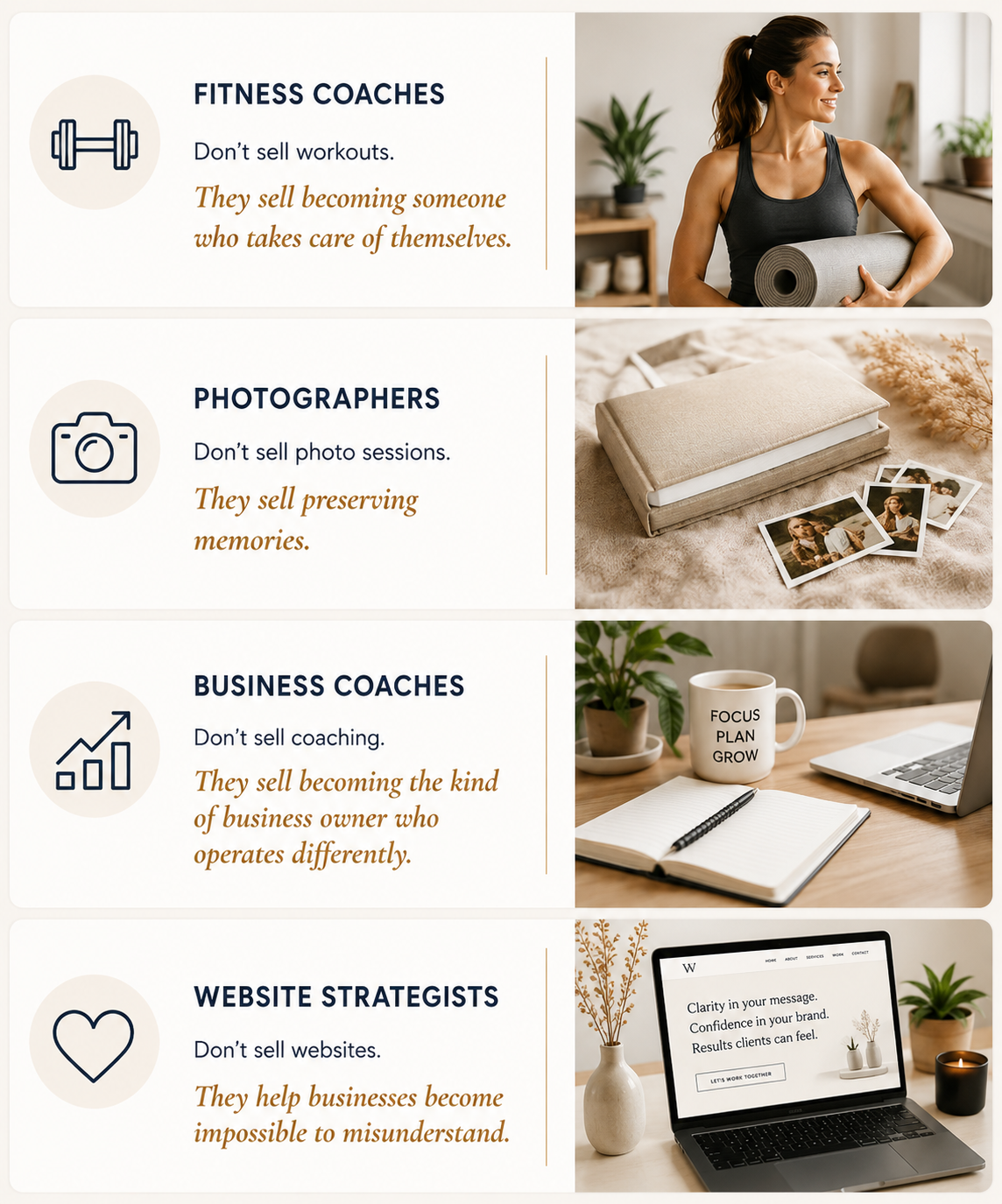
Here’s something you’ll start noticing once you understand priming. The best websites don’t just sell services.
They reinforce identities.
YOUR WEBSITE IS CONSTANTLY PRIMING.
The words you choose shape what people expect, how they behave, and the kind of client they become.
Intentional words attract the right people naturally. choose
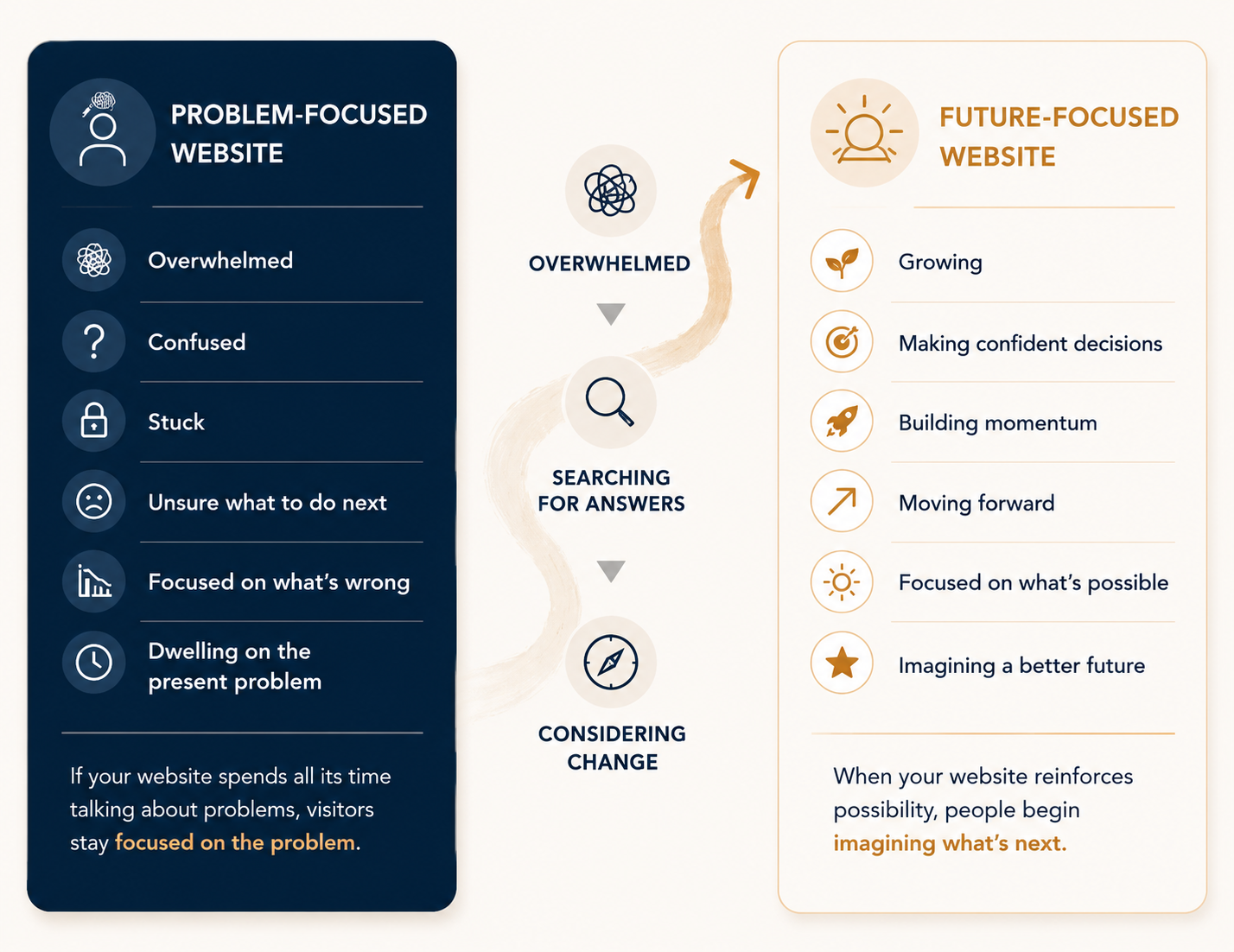
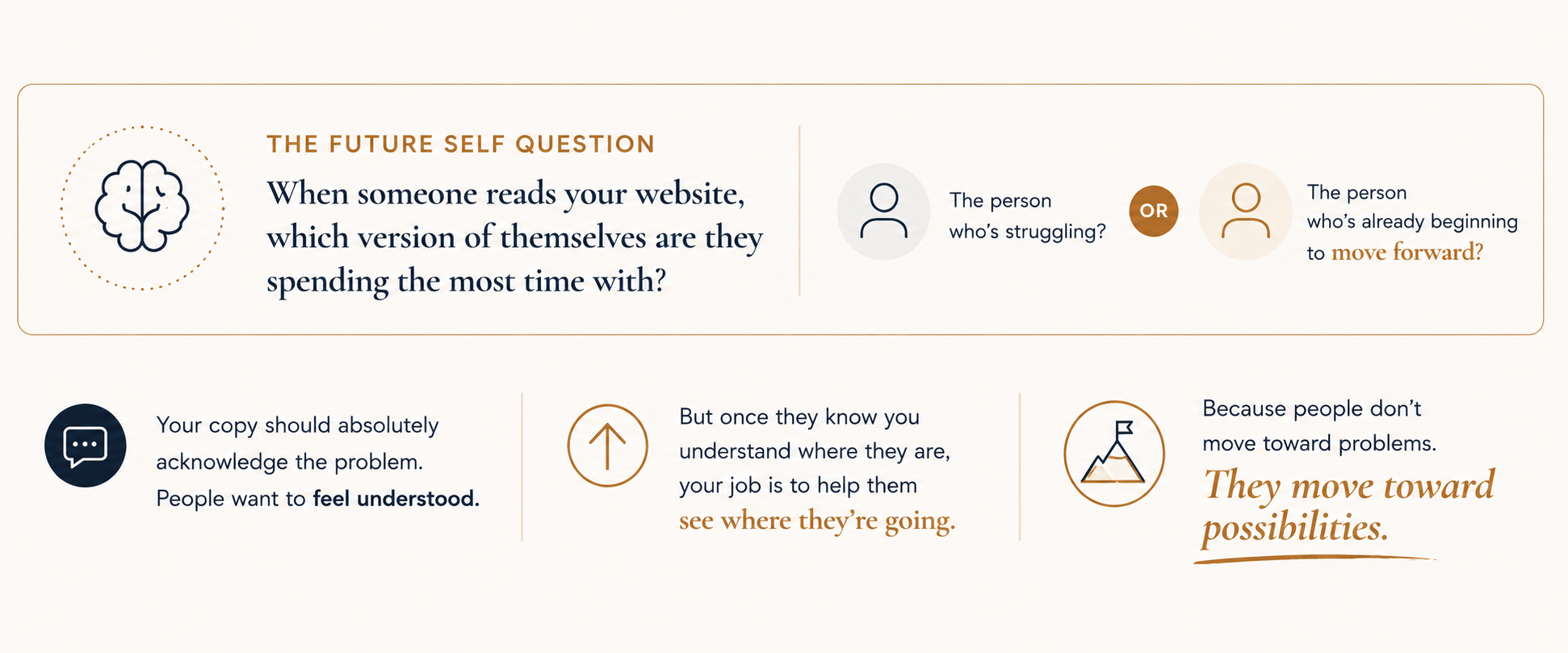
The Future Self Test
The strongest websites don't just describe where your clients are today.
They help people imagine who they're becoming.
The Best Copy Doesn’t Feel Like Copy
One of the biggest misconceptions about website copywriting is that great copy sounds clever.
It doesn’t. Great copy sounds clear.

Visitors are not thinking:
“Wow, that’s a clever headline.”
What visitors actually want to feel:
“Finally. Someone understands what I’m trying to do.”
And that’s exactly what strategic priming should do.
It prepares people. It sets expectations. And it helps them take the next right step with confidence.
Your Website Is Already Priming Visitors.
The question is whether it's doing it intentionally.
Every headline.
Every button.
Every service description.
Every contact form.
They're all teaching people what to expect from working with you.
The Website Priming Blueprint will help you uncover those hidden messages and make sure your website is creating the right expectations from the very beginning.
Inside you'll learn how to:
• Evaluate your current messaging
• Spot accidental priming
• Strengthen trust and clarity
• Improve your homepage messaging
• Create stronger calls-to-action
• Guide visitors toward the next step with confidence
Because the strongest websites don't happen by accident.
They're built intentionally.
And once you learn to see the expectations your website is creating, you'll never look at your copy the same way again.
